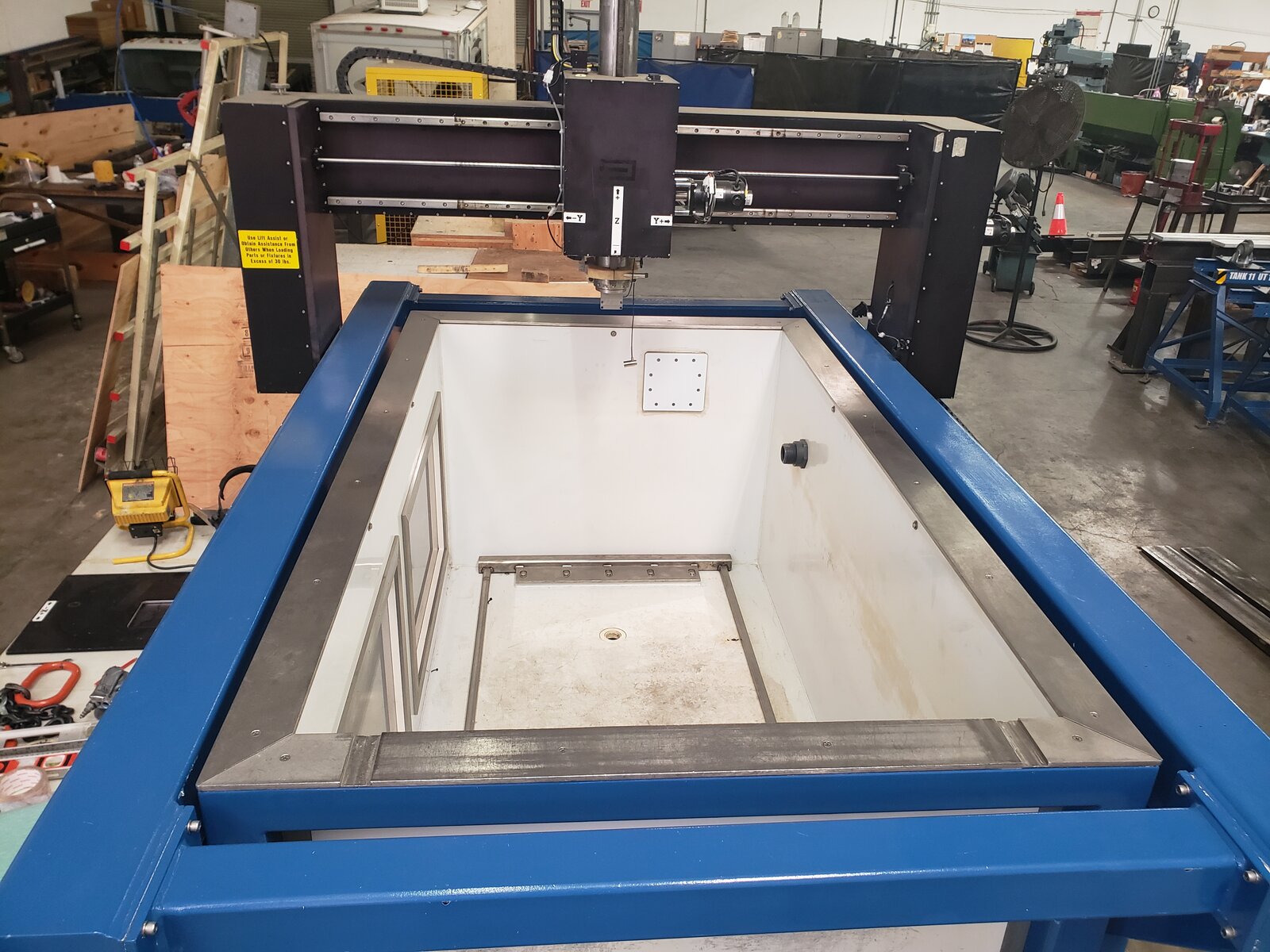
HOW IT WORKS
A transducer sends a high-frequency sound pulse into the material. That pulse travels through the part and reflects off internal boundaries — the back wall, or the edge of a flaw. By timing how long the echo takes to return, and measuring its amplitude, an inspector can locate a defect's depth and estimate its size without ever opening the part up.
This is what separates UT from destructive testing methods: the part being inspected comes out exactly as it went in. That makes it the standard for aerospace, automotive, and pressure-vessel applications where every finished part matters.
WHAT UT DETECTS
Built for the flaws that matter most
Internal Voids & Porosity
Trapped gas or material gaps that weaken structural integrity from the inside out.
Cracks & Laminations
Fatigue cracks and layer separation that can propagate under load if left undetected.
Wall-Thickness Variation
Corrosion or manufacturing variance in pipe, tube, and pressure-vessel wall stock.
COMMON QUESTIONS
Is ultrasonic testing safe for the part being inspected?
Yes — UT is fully non-destructive. The part experiences no physical change from the inspection process itself.
What materials can be tested with UT?
Metals, composites, and many plastics — SDI systems are engineered around the specific acoustic behavior of the material and part geometry being inspected.
How does SDI choose delivery method — immersion, squirter, or contact?
Delivery method depends on part geometry, production volume, and material. SDI's engineers can recommend the right configuration for your application.
Ready to see UT systems built for your part?
Browse SDI's full range of inspection systems.