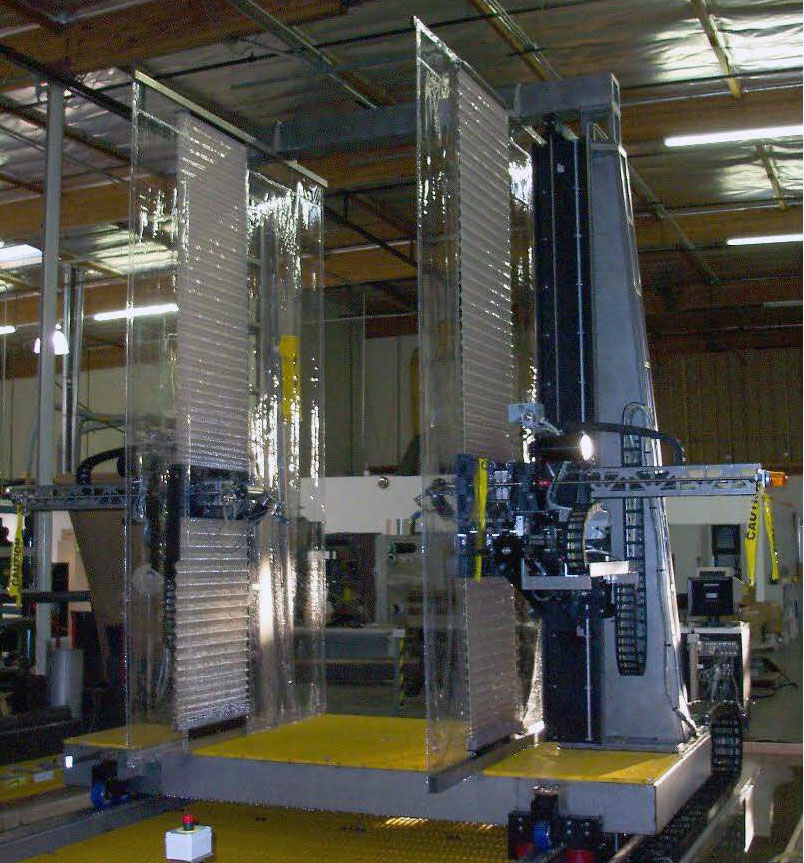
When a part runs taller than it runs wide — forgings, cone-shaped composites, large turbine components — a vertical scan path fits the part better than a horizontal one. SDI's tower line runs from a compact entry-level frame up to independent dual-tower rigs built for the heaviest components in the shop.
Every configuration below shares the same underlying motion control and acquisition platform — the difference is scale, axis count, and how many scan heads work the part at once.
Vertical Frame Through-Transmission System
The entry point into SDI's tower line — a straightforward vertical frame built for locations with limited ceiling height, where a full 3D scanning tower isn't needed.
| Configuration | Vertical frame, through-transmission |
| Typical use | Limited-ceiling installations, straightforward part geometry |
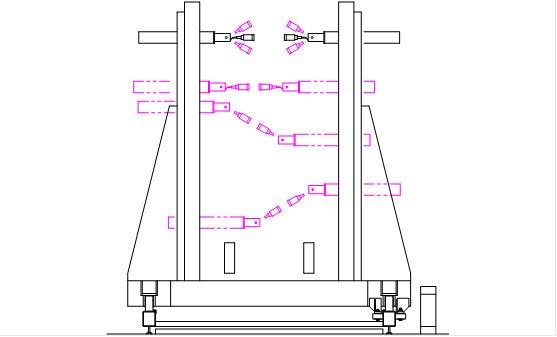
Vertical Frame 3D Scanning System
Adds full 3D curve-following to the vertical frame platform — built for tall parts with contour that a straightforward through-transmission frame can't follow.
| Configuration | Vertical frame, 3D scanning |
| Scanning | 3D curve-following |
| Typical use | Tall contoured parts |
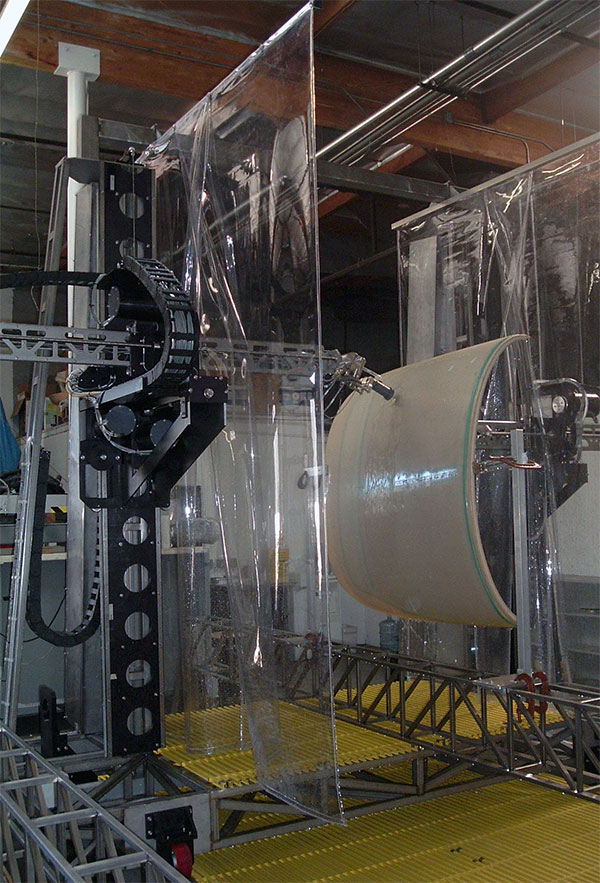
Vertical Frame 3D Scanning System — Contoured Composites
Tuned specifically for cone-shaped and contoured composite parts — nacelles, engine cowlings, and similar radially-tapered structures where the scan head needs to follow a changing profile from top to bottom.
| Configuration | Vertical frame, 3D scanning |
| Scanning | 3D curve-following, tapered profiles |
| Typical use | Nacelles, cowlings, cone-shaped composites |
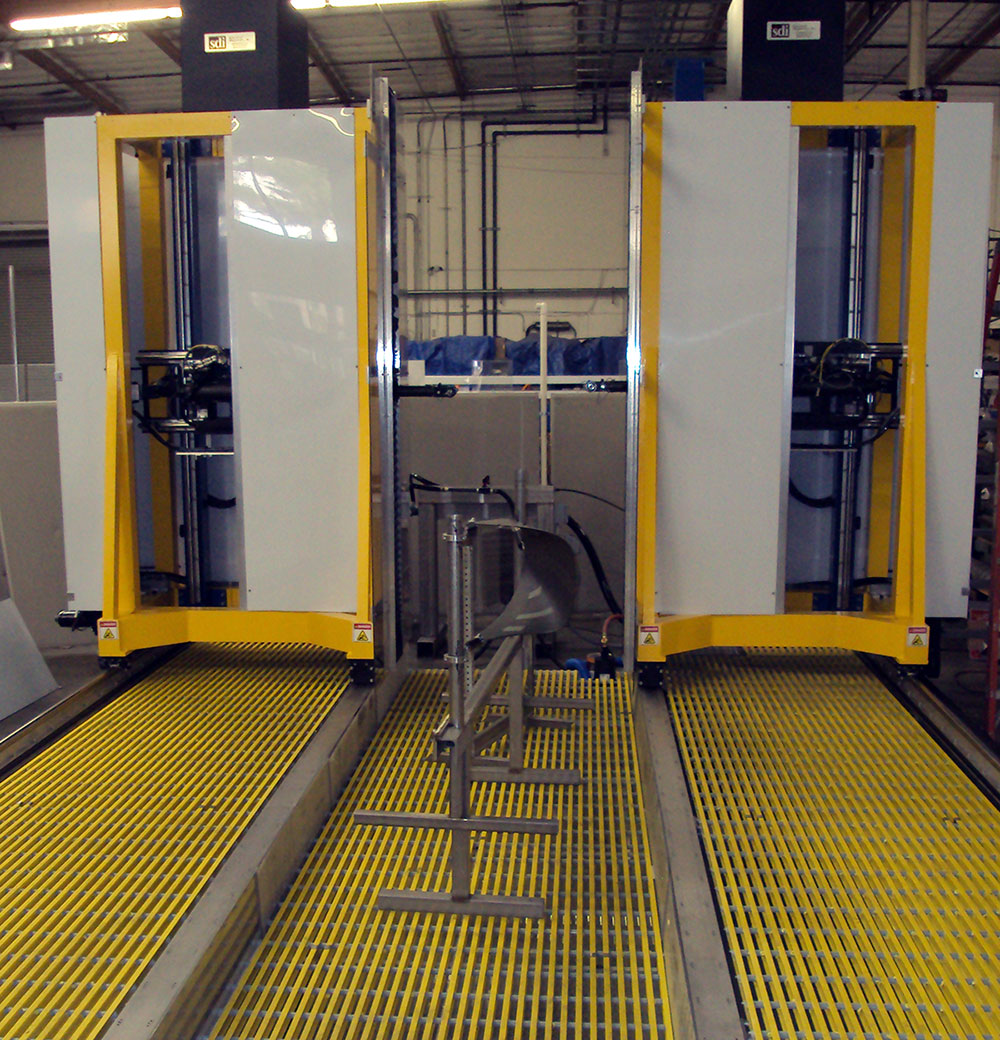
Independent Tower 3D Scanning System
Dual independent towers scan simultaneously from opposite sides of the part — the largest-capacity configuration in SDI's tower line, built for the heaviest forgings and turbine components.
| Configuration | Dual independent towers |
| Scanning | Simultaneous, opposing sides |
| Typical use | Heavy forgings, large turbine components |
Working with a tall or heavy component?
SDI's engineers can match a tower configuration to your part.